

MIGRATION
TO SHOPIFY
Hesitating? Want advice? Or have you already decided? Then let's go.

We'll kickstart your
MIGRATION TO SHOPIFY
If you've hit the limits of your current platform, Shopify is the logical next step. Instead of a closed system with limited customisation, you get an open global platform built for growth - and expansion into international markets.
It supports multiple currencies and languages, integrations with external systems, and seamless connection between online and offline sales through a unified POS. We'll help you migrate smoothly - preserving your SEO, data and customer experience.
Yes, we want to migrate
New features for speed, automation and international growth push Shopify another step ahead of local platforms. If you feel your store is held back by technology, now is the ideal time for a change. Read our overview of the most important things from Shopify Edition Winter 2026 or take a look right away at everything Shopify can newly do on the official site.
Get in touchFeatures you will love:
If you have been around standard stores for a while, you will certainly appreciate these features and capabilities that come built-in with Shopify
Multichannel integration
Sell from a single admin across all channels - Instagram, TikTok, Google Shopping, Amazon. One warehouse, one source of truth for inventory, everything from the Shopify admin.

Social media integration
Direct selling via Instagram, TikTok, Facebook and YouTube. Unified management of campaigns, products and orders from one place. Customers buy where they already are.

Taxonomy and categorisation
Advanced product organisation with Shopify product taxonomy - over 10,000 standardised categories. Better search, SEO and customer experience.

Show it to the world in the app
The Shopify Shop App gives customers a branded mobile experience. Notifications, order tracking, personalised feed - in every customer's phone.

B2B pro solution
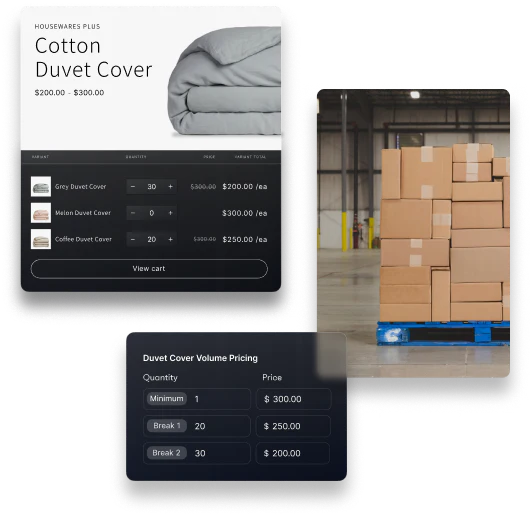
Shopify Plus enables full B2B functionality - custom price lists, company accounts, approval processes, ERP connection and B2B checkout. Enterprise features without the enterprise price.
Migrating to Shopify - frequently asked questions
Will migration cost me my search rankings?
Not if a map of old URLs to new ones is built and 301 redirects are deployed. That's the one measure that genuinely holds rankings; without it Google finds the old URLs as 404s and drops them.
We build the map before launch and check indexing after the switch. Short-term movement in rankings is normal. A real drop is usually the result of missing redirects, not of the migration itself.
How long will my store be down?
With a properly run migration there is no loss of trading time. The new store is built alongside the existing one on a test domain and only switched over after full testing, by changing DNS.
We schedule the switch for the night. The real window where anything might show is a few hours - and even that is DNS propagation rather than downtime.
What can be transferred?
Products, variants, collections, customers, orders, page and blog content. We move order history too, so customer support and analytics carry on where they left off.
What doesn't move by itself: app settings, loyalty points and email lists. Those are handled separately and are worth planning for early - losing a subscriber list hurts more than anything else.
Can I convert the products myself?
If you're coming from Shoptet, yes. We built a free tool for exactly that, running right in your browser: upload the export, download a file in the format Shopify accepts.
For more complex catalogues - many variants, metafields, warehouse links - it's worth talking the migration through. Not because it can't be done, but because cleaning the data usually costs more than moving it.
When is migration not worth it?
When you sell locally only, have no expansion plans, are happy with support in your own language and nothing on your current platform is holding you back. Then changing platform is a cost without a return.
We'll tell you so. We have no reason to push anyone into a migration they gain nothing from - we wrote a comparison of Shopify and Shoptet that goes through it in detail.
Can Shopify handle local payments and carriers?
Yes, but not out of the box - unlike a local platform, it has to be set up. Language is handled by translating the theme, payments through gateways like Comgate or GoPay, carriers through apps.
It's one-off work at setup. Budget for it, so it doesn't come as a surprise that "Shopify can't do it". It can - it just isn't switched on overnight.